
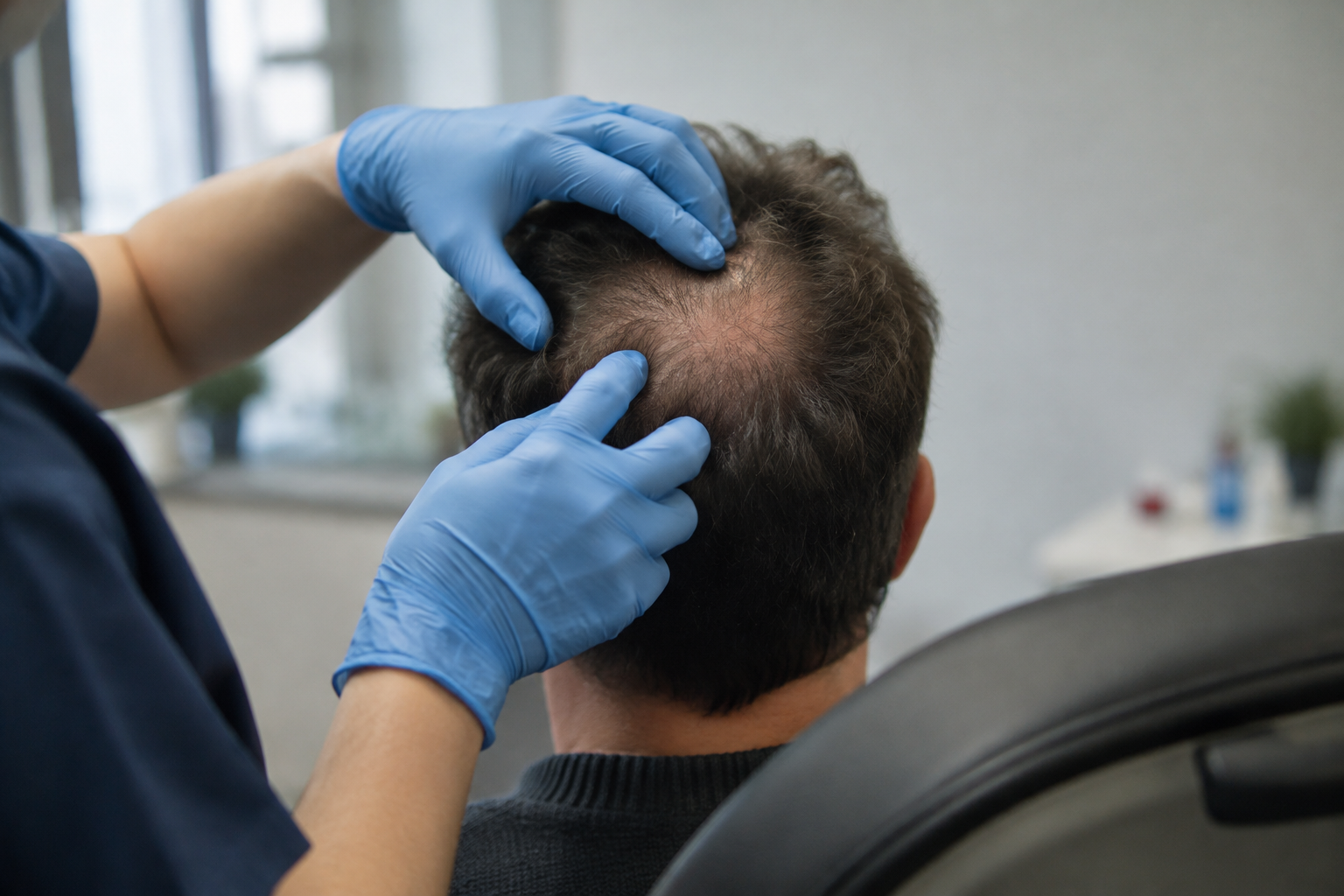
What the reported studies show about Mounjaro and Wegovy hair loss
People taking semaglutide or tirzepatide had higher rates of hair-loss diagnoses in a 2026 US medical-records study, according to a Japanese commentary published on the platform Note. The account describes an association over 12 months, but does not establish that either medicine directly damaged hair follicles.
Semaglutide is the active ingredient in Wegovy and Ozempic; tirzepatide is sold in the UK as Mounjaro. The distinction between a medicine causing hair loss directly and weight reduction triggering temporary shedding is central to interpreting the findings.
The Note article cites research attributed to Lanehart and colleagues in Archives of Dermatological Research. Its detailed comparison involved 163,839 people starting semaglutide and 166,261 starting metformin, a diabetes medicine, using records from the US TriNetX database.
Within a year, 1,053 people in the semaglutide group had a diagnosis of non-scarring alopecia, compared with 750 in the metformin group. The reported rates were approximately 0.64% and 0.45% respectively: an absolute difference of about 0.19 percentage points, or roughly two additional diagnoses per 1,000 people.
The relative risk was reported as 1.43 for semaglutide and 1.68 for tirzepatide. The commentary does not provide equivalent absolute figures for tirzepatide, so the semaglutide numbers should not be presented as a measure of the risk with Mounjaro.
These are diagnoses recorded in healthcare data, not a count of everyone who noticed extra hair in a brush or shower. Nor do they establish the likelihood of shedding for an individual patient. The findings are reported here through the Note commentary, rather than an independent assessment of the underlying papers.
How rapid weight loss can affect the hair cycle
Telogen effluvium is a recognised response to physical stress, including rapid weight loss, severe illness or high fever. More growing hairs than usual enter a resting phase, with increased shedding typically becoming apparent two to three months later.
Unlike scarring forms of hair loss, this process does not destroy the follicles. The commentary describes shedding that often settles within a few months after the trigger has subsided, although that expectation depends on telogen effluvium being the correct diagnosis.
Appetite suppression can substantially change how much someone eats while taking a weight-loss medicine. GLP-1 medicines act on pathways involved in appetite and blood glucose regulation; tirzepatide also acts on the GIP receptor. A reduction in food intake and a marked change in weight can occur alongside treatment, making their separate effects difficult to distinguish.
The Note article also cites hair-loss reports of 3.3% with semaglutide 2.4 mg and 1.0% with placebo from US prescribing information, discussing those figures alongside the 2021 STEP 1 trial. Participants receiving semaglutide in that trial lost about 15% of their starting weight on average over 68 weeks.
Those percentages should not be treated as interchangeable with the medical-records findings. Trial adverse-event reports and routine healthcare diagnoses use different methods of identifying problems, while the follow-up periods and comparison groups also differ. Our coverage of Ozempic weight-loss figures, doses and side effects examines why those distinctions matter when interpreting treatment results.
The commentary further describes a 2026 systematic review in Skin Appendage Disorders covering 17 studies. It reports an odds ratio of 1.40 for the association between GLP-1 medicines and non-scarring alopecia. That measure describes an association across the included evidence; it is not a statement that 40% of users lose their hair.
What the study authors and Japanese commentator say
According to the Note account, Lanehart and colleagues consider weight-loss-related telogen effluvium a more plausible explanation than direct follicle damage. The reported association was stronger with medicines producing greater weight reduction, while no clear difference was found with dulaglutide or liraglutide.
That pattern supports a hypothesis, not a settled explanation. The commentary acknowledges that retrospective records and adverse-event reports cannot establish causation, and that the diagnoses were not all confirmed through a dermatologist's examination of the scalp.
The writer identifies themselves as a hair diagnostic consultant running a salon in Shizuoka, Japan. They describe clients reporting more diffuse shedding two to four months after beginning medication, sometimes alongside a substantial reduction in food intake. These are salon observations, not systematically collected clinical evidence, and the writer explicitly says they cannot diagnose clients.
The account also notes reports of androgenetic alopecia, or pattern hair loss. It remains uncertain whether temporary shedding makes existing thinning more noticeable or whether another mechanism is involved. This matters because the broad category of non-scarring alopecia includes conditions with different causes and courses.
What patients noticing hair loss should do next
The commentary advises people to approach their prescribing clinician rather than stop their medicine or alter the dose themselves. Recording when treatment began, when weight loss accelerated and when shedding became noticeable can help organise that discussion. The same emphasis on follow-up runs through our reporting on monitoring Mounjaro side effects.
It identifies several reasons to seek medical assessment: circular or band-like areas of loss; scalp redness, pain or marked itching; shedding that continues beyond six months or keeps worsening; and symptoms such as fatigue, palpitations, sensitivity to cold or menstrual changes. The latter can point to problems such as iron deficiency or thyroid disease rather than a medicine-related effect alone.
Dietary advice in the article centres on maintaining adequate food and protein intake, including foods such as eggs, fish, meat or soya. It says there is insufficient evidence that adding supplements prevents hair loss in people who already receive enough nutrients.
The unresolved research question is whether these medicines have an effect on hair independent of weight reduction, dietary change and pre-existing thinning. The observational findings described cannot separate those influences, or establish reliable differences in hair-loss risk between individual drugs.