
What the research found about weight-loss jabs and nails
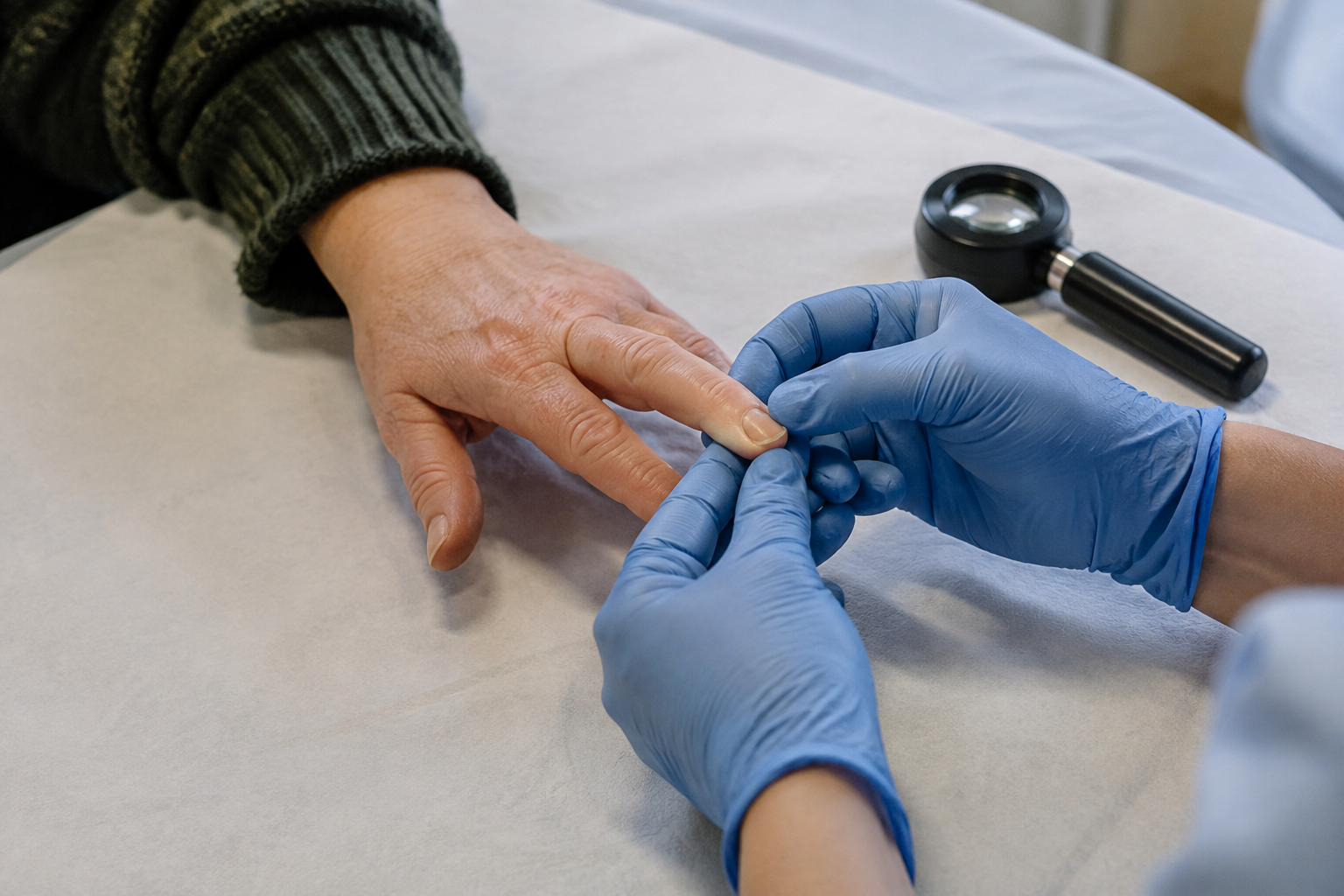
Researchers presenting findings at the European Academy of Dermatology and Venereology Congress in Austria found that people taking weight-loss injections reported more nail disorders than non-users. According to Daily Mail reporting published on 30 September and updated on 1 October 2026, the comparison included 575 injection users and 1,329 people with type 2 diabetes, obesity or both who had never taken the medicines.
In the detailed results reported by the newspaper, 66 per cent of injection users described at least one nail disorder, against 53 per cent of the comparison group. That is a difference of 13 percentage points, although nail complaints were common in both groups.
Nail detachment was reported to be more than four times as common among those taking the injections. This means separation of a fingernail or toenail from the skin beneath it; it does not necessarily mean that the entire nail falls off.
The newspaper did not give the absolute numbers experiencing detachment. The relative comparison therefore cannot tell readers how frequently that particular problem occurred in either group.
Discolouration was reported by 46 per cent of injection users, compared with 17 per cent of non-users. The researchers also found more nail problems among injection users when comparing them with people who had lost weight through diet and exercise, although the report did not provide figures for that comparison.
These findings show an association. They do not establish that the medicines themselves damaged nails, or that any particular patient will develop a nail disorder after starting treatment. Nor does the report provide separate results for Ozempic, Wegovy and Mounjaro, so it cannot support a comparison of their individual nail risks.
How weight-loss treatment could affect nails and hair
Ozempic and Wegovy contain semaglutide, which acts on the GLP-1 receptor. Mounjaro contains tirzepatide, which acts on both GLP-1 and GIP receptors. These medicines influence appetite and blood glucose regulation, but their licensed uses differ: Ozempic is a diabetes medicine, while Wegovy is used for weight management and Mounjaro has both diabetes and weight-management indications.
The proposed explanation for the nail findings centres on weight loss and nutrition rather than a demonstrated toxic effect on the nail. Nails are largely made of keratin, a structural protein, and healthy growth depends on adequate nutrition.
According to the Daily Mail, the researchers suggested that faster weight loss may place the body under stress, disrupting nail growth as resources are directed towards more essential functions. Substantial restriction of food intake could also leave patients short of nutrients important to nail health, including iron, zinc and biotin.
Those are possible mechanisms, not confirmed explanations for the differences observed. The account does not establish that participants with nail changes had measured deficiencies, or that correcting a deficiency would resolve their symptoms.
A second study involving the same participants examined hair and scalp complaints. About half of injection users reported increased shedding, compared with just over a third of non-users. Hair thinning affected more than 40 per cent of injection users, and scalp redness was around three times as frequent in that group.
Shedding was often accompanied by itching or scaling. Those additional symptoms matter because they may require a different assessment from hair shedding alone after substantial weight loss.
The findings concern injection users and should not automatically be applied to other formulations. Our separate coverage of research on switching from injections to the Wegovy pill addresses a different treatment question, not comparative nail safety.
What the study authors said about nail and scalp symptoms
Lead author Dr Charles Taïeb said the evidence concerning effects on skin, hair and nails was “not just anecdotal”, according to the Daily Mail. The comparison provides figures beyond individual accounts, although it leaves important questions about cause unanswered.
Dr Bruno Halioua, another study author, suggested that the combination of shedding and scalp symptoms could indicate inflammation as well as the familiar response to rapid weight loss. He also said scalp problems could be overlooked by doctors, despite treatments such as moisturisers and steroid creams being available for appropriate conditions.
His advice was to raise hair shedding, an itchy or red scalp, and nail changes with a doctor rather than regard these symptoms as an automatic reason to stop treatment. The appropriate response depends on what is causing the problem; the study does not establish a single treatment for everyone affected.
The newspaper also cited UK Medicines and Healthcare products Regulatory Agency data showing 940 reports of hair loss associated with tirzepatide since the start of 2025, and at least 312 linked to Wegovy and Ozempic. Such suspected adverse-reaction reports help identify potential safety signals. They do not, by themselves, prove causation or measure the proportion of users affected.
What patients need to know as nail findings are assessed
The immediate question for a patient noticing a change is what explains it. Nail discolouration, separation and scalp irritation can have causes unrelated to weight-loss medication. A clinical assessment can consider the symptom alongside the timing of treatment, changes in diet and weight, and other relevant health conditions.
The Daily Mail account does not provide enough methodological detail to establish how far the comparisons accounted for differences between the groups. It also does not give a clear picture of when symptoms began, how long they lasted, or whether they improved while treatment continued.
Further evidence would need to distinguish the effects of the medicines from those of weight loss, reduced food intake and underlying illness. Brand-specific results and absolute figures for nail detachment would make the findings more useful when discussing an individual prescription.
Any decision to stop treatment should also consider its wider consequences. Research into support after stopping GLP-1 treatment addresses the separate concern of weight regain. For now, the authors’ practical advice is to report symptoms to the treating clinician, rather than make a treatment decision on the strength of a headline.